
Crawl Space Mold Removal in Lafayette, LA
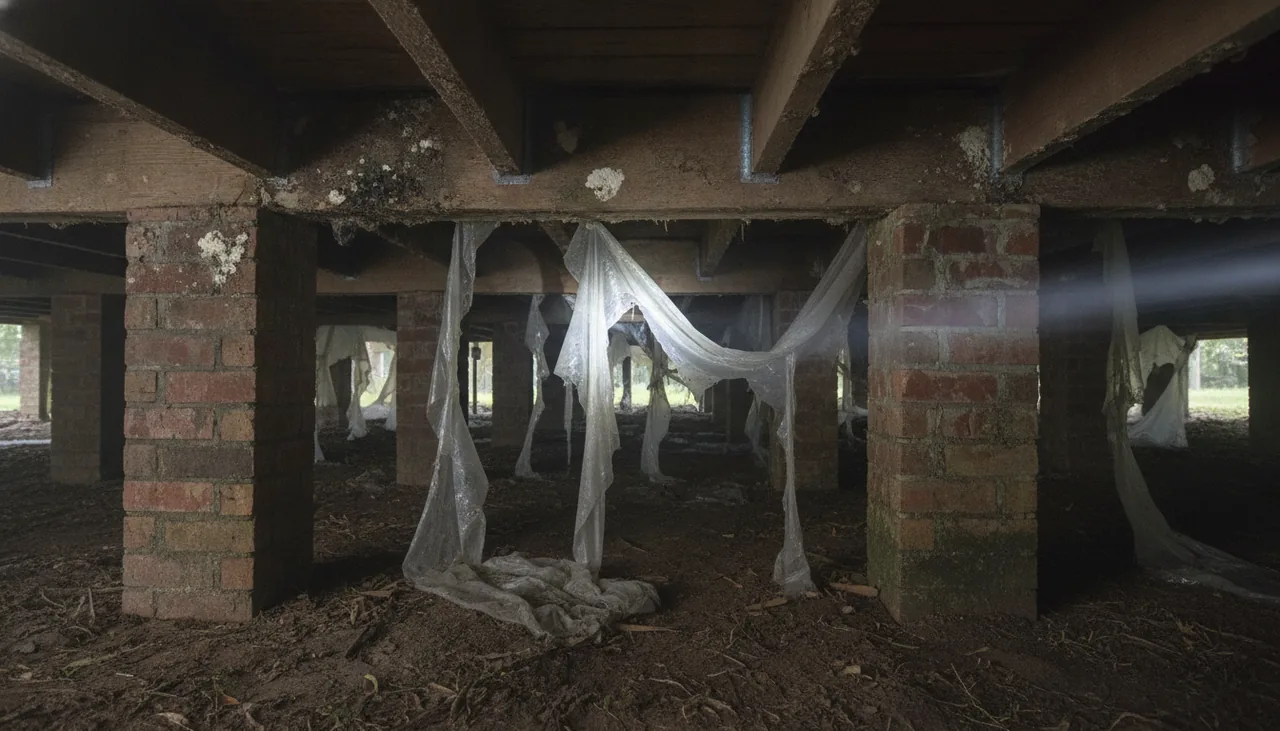
Crawl space mold in Lafayette grows where a raised house meets damp ground. Bare soil gives off moisture all year, humid air drifts in through the vents all summer, and the cool joists and subfloor collect it. Here the ground itself is often the source: the most common soil in the parish, Frost silt loam, drains slowly and can hold water within 1.5 feet of the surface from December through April. Removal means treating and drying the framing, pulling wet insulation, then a sealed vapor barrier or full encapsulation, with an independent assessment first and a separate contractor doing the work. Call (337) 294-0039.
Call (337) 294-0039 Request a callback
Why Lafayette crawl spaces grow mold
Wet ground. The USDA soil survey of Lafayette Parish names soil wetness as the main limitation on the Coteau-Frost and Patoutville-Frost soils, which together cover 54% of the parish. Frost silt loam alone covers 21.5% of it.
Raised houses. Part of the older city sits on piers. In the Freetown-Port Rico historic district near Johnston Street, listed on the National Register in 2016, the nomination notes that most houses are raised on piers and clad in wood weatherboards. Sterling Grove's 59 listed buildings, mostly built from 1890 to 1934, are overwhelmingly wood-frame.
Rain and humid air. Measurable rain falls on 117.5 days in an average year at the airport, and summer dew points average above 70°F (NOAA normals), so foundation vents bring in damp air for months on end.
Signs of crawl space mold from inside the house
- A musty smell that is strongest in rooms with wood floors and fades upstairs or on a slab addition.
- Wood floors that cup or gap with the seasons, or feel soft near a bathroom or the kitchen sink.
- Indoor humidity that stays high with the air conditioning running.
- Insulation sagging or fallen from between the joists, seen from the access hatch.
- Ducts under the house dripping with condensation in summer.
How crawl space mold is removed
The independent assessor goes under the house with a moisture meter and a light: readings in the joists, beams and subfloor, the state of the vapor barrier, the insulation, the ducts, the plumbing and the vents, and where water enters or pools. The scope that follows says what comes out, what is treated and how the space will be kept dry.
A separate remediation contractor then removes wet insulation and debris, HEPA-vacuums and cleans the framing and the underside of the subfloor, treats the wood, and dries it to normal readings. Any rotted section of joist is sistered or replaced. Drainage problems, such as a low spot that holds water or a gutter that empties against the foundation, are corrected before the ground is covered. Someone other than that contractor checks the work. Louisiana requires the two firms to be separate (La. R.S. 37:2158(A)(23)).
Vapor barrier or full crawl space encapsulation
Vapor barrier. Heavy plastic sheeting laid over the soil with the seams overlapped and taped, stopping most of the ground moisture. The foundation vents stay open. It suits a crawl space with good drainage and reasonable airflow.
Encapsulation. A thicker liner run over the ground and up the walls and piers, sealed at every seam, with the vents closed and a dehumidifier or a small supply of conditioned air keeping the space dry. It costs more and suits crawl spaces that stay damp even with a barrier down.
Neither one belongs over wet, moldy framing. The cleanup and drying come first, then the cover.
Crawl space mold removal cost in Lafayette
A crawl space job runs $3,000 to $12,000. The lower end covers treating the joists and subfloor, removing wet insulation and laying a new vapor barrier; the upper end is full encapsulation with a dehumidifier. Size, headroom and any drainage work move the figure. The assessment with the crawl space entry comes to $375 to $750 in total.
Booking a crawl space mold visit
Call (337) 294-0039. Say roughly how high the crawl space is, where the access hatch is, and whether you know of standing water under the house or a barrier that has torn. The callback form below takes the same details.
Crawl space mold questions
Is white mold on the floor joists a problem?
It shows the wood has been wet long enough for growth to start, and white growth is common on crawl space framing. Left alone, the moisture behind it can soften the wood. Call (337) 294-0039 to have the joists checked.
Will encapsulation keep crawl space mold away?
It keeps ground moisture and outside air out, which removes most of the reason mold grows there, as long as the dehumidifier runs and the liner stays sealed. Call (337) 294-0039 to ask which option fits your house.
Should crawl space vents be open or closed?
With a plain vapor barrier they normally stay open; with full encapsulation they are sealed and the space is dried mechanically. Mixing the two causes trouble. Call (337) 294-0039 before closing vents.
How much does crawl space encapsulation cost in Lafayette?
Crawl space work runs $3,000 to $12,000, and full encapsulation with a dehumidifier sits at the upper end. Call (337) 294-0039 for a price on yours.
Does the crawl space have to be dry before a barrier goes down?
Yes. Covering wet, moldy framing traps the problem under the liner, so cleanup and drying always come first. Call (337) 294-0039 to set the order of work.
Can the firm that assesses the crawl space also encapsulate it?
Not when mold remediation is involved. La. R.S. 37:2158(A)(23) keeps assessment and remediation with separate firms on one property. Call (337) 294-0039 to arrange both.
Request a Callback
Would you rather write than phone, or is the line closed for the day? Put your details below and a call back will follow.
Prefer the phone? Call (337) 294-0039 at any hour.
Musty smell from under the house?
Call (337) 294-0039. Inspection under the house, written price, framing cleaned and the crawl space kept dry.
Call (337) 294-0039